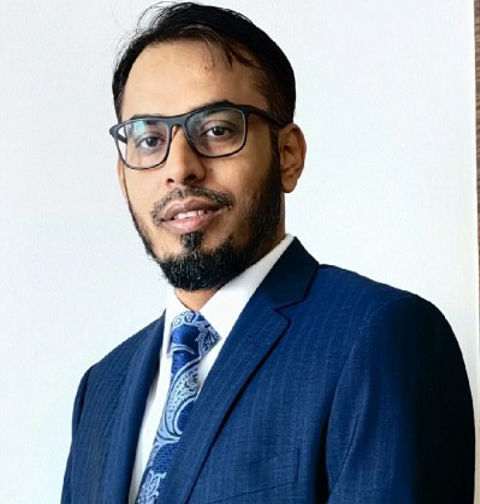
Dr Mohammad Abdullah Nadwi
PhD, CSAA
Biography
Dr. Mohammad Abdullah Nadwi is a distinguished scholar and expert in Islamic sciences, specializing in Islamic banking, Islamic finance, and Islamic social finance. With a comprehensive academic background and extensive experience in the field, Dr. Abdullah has made a significant contribution to the world of Islamic finance by serving as a senior Shariah advisor and consultant to various financial institutions across the globe, including Europe, South America, the Caribbean, and the UAE.
01Academic and Professional Background
Dr. Abdullah holds a PhD in Islamic Banking, Finance, and Management from the University of Gloucestershire, UK, where his doctoral research focused on analyzing the jurisprudence of Waqf (Fiqh al-Awqaf) and its socio-economic implications vis-à-vis the English trust system. His pioneering work has provided critical insights into how Islamic endowments can play a pivotal role in modern socio-economic development.
In addition to his doctoral degree, Dr. Abdullah also holds a Master’s in Islamic Finance from the University of Gloucestershire, graduating with distinction. He began his educational journey at Darul Uloom Nadwatul Ulama in Lucknow, India, where he earned his Bachelor’s degree in Shariah Sciences. Dr. Abdullah’s pursuit of knowledge has also led him to become a Certified Shariah Advisor and Auditor (CSAA), certified by the Accounting and Auditing Organization for Islamic Financial Institutions (AAOIFI).
02Leadership and Consultancy in Islamic Finance
Dr. Abdullah has earned a reputation as a Shariah scholar of high distinction, consulting and advising for leading financial institutions such as Abu Dhabi Commercial Bank and First Abu Dhabi Bank (FAB), among others. His expertise spans Shariah governance, Waqf studies, Sukuk structuring, Takaful, Islamic social finance, and the development of Islamic financial products. He currently serves as a Senior Shariah Advisor at Abu Dhabi Commercial Bank, where he leads efforts in Shariah consultation, review, and compliance.
Before his role at Abu Dhabi Commercial Bank, Dr. Abdullah held prominent positions at Habib Bank AG Zurich, where he served as the Head of Internal Shariah Control, and First Abu Dhabi Bank, where he was a Director responsible for Shariah review, Sukuk structuring, and corporate finance. Throughout his career, Dr. Abdullah has ensured that Islamic financial institutions comply with Shariah principles, protecting their integrity and fostering trust within the industry.
03Research and Publications
Dr. Abdullah is also a prolific researcher, having authored numerous research papers and book chapters on a variety of subjects related to Islamic finance. His work on Waqf (Islamic endowments), Shariah governance, and Islamic social finance has been published in reputable journals and presented at international conferences in countries such as Germany, Norway, the UK, Trinidad & Tobago, and Indonesia.
Among his most notable contributions is his research on the role of Waqf in socio-economic development, particularly its potential in alleviating poverty in the Muslim world. His research critically examines the structure, governance, and modern implications of Waqf, with a particular focus on how this traditional Islamic institution can be adapted to meet contemporary needs.
04International Recognition and Impact
Dr. Abdullah’s expertise has earned him recognition as a leading figure in Islamic finance. He is frequently invited to speak at international conferences and has presented his research in countries across Europe, Asia, and the Americas. His work is particularly focused on bridging the gap between classical Islamic financial principles and modern financial systems.
In addition to his advisory roles, Dr. Abdullah serves as a reviewer for policy research papers for international academic journals and organizations such as the Islamic Research and Training Institute (IRTI) and the Islamic Development Bank (IDB). His academic rigor and professional experience have made him a trusted voice in shaping the future of Islamic finance globally.
06Conclusion
Dr. Mohammad Abdullah Nadwi stands as a beacon of scholarly excellence and professional integrity in the world of Islamic finance. His unique combination of academic expertise, practical experience, and commitment to Shariah-compliant financial solutions positions him as a vital contributor to the growing field of Islamic social finance. Whether through his research, advisory roles, or public speaking engagements, Dr. Abdullah continues to lead efforts in promoting ethical and sustainable financial practices that align with Islamic values.